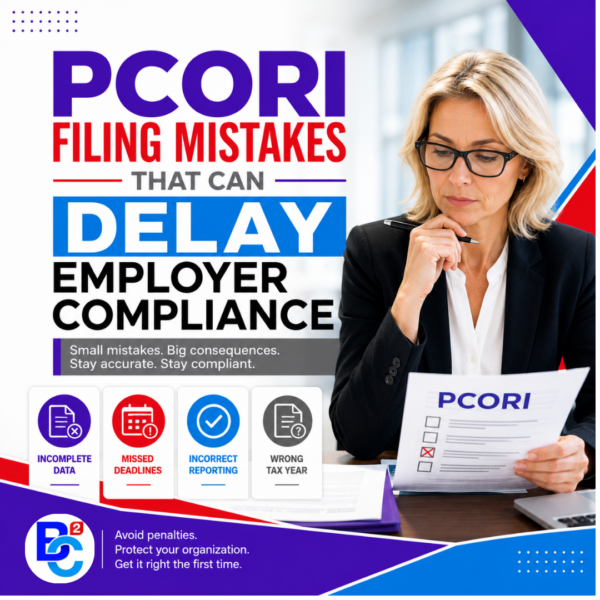
PCORI filing mistakes often begin with incorrect assumptions about plan structure, filing responsibility, or covered lives calculations. Employers that identify these issues before filing are better positioned to complete their reporting accurately, avoid unnecessary corrections, and keep compliance activities moving forward.
While the annual PCORI filing requirement is straightforward, preparation is not always as simple. Funding arrangements, plan design, and incomplete documentation frequently create questions that delay the filing process once review begins. Many of these issues are discovered only after employers begin gathering information close to the deadline.
A proactive review helps confirm who is responsible for filing, how covered lives should be calculated, and whether supporting documentation is complete before the return is prepared. Addressing these items early reduces unnecessary delays and helps employers meet their compliance obligations with greater confidence.
The following are some of the most common PCORI filing mistakes that can delay employer compliance and create additional work during the filing process.
Why PCORI Filing Mistakes Create Compliance Delays
PCORI filing mistakes rarely remain isolated.
An incorrect decision about plan funding can affect filing responsibility, covered lives calculations, the fee amount, and the Form 720 filing itself. Once preparation begins, one unresolved issue can force the employer to stop, locate additional records, and correct work that has already been completed.
The closer this happens to the deadline, the less time remains to resolve the problem accurately.
Employers can reduce that pressure by confirming plan structure, filing responsibility, applicable plan years, and calculation methods before the return is prepared.
Incorrect PCORI Filing Responsibility
Assigning responsibility to the wrong party is one of the most serious PCORI filing mistakes.
For an insured policy subject to the PCORI fee, the insurer is generally responsible for reporting and payment. For an applicable self-insured health plan, the plan sponsor is generally responsible for calculating the fee, filing Form 720, and submitting payment.
Problems begin when an employer assumes that a carrier or outside service provider is handling the requirement without verifying the plan’s funding arrangement.
That assumption can leave a required filing unfinished until the mistake is discovered near the deadline.
Plan funding should be reviewed before covered lives are calculated, or the return is prepared. BC² helps employers identify filing responsibility and address potential issues through its PCORI compliance services.
Level-Funded Plans Are Frequently Misclassified
Level-funded plans can create confusion because they combine predictable monthly payments with self-funded plan features.
Employers may believe the arrangement is fully insured and assume the carrier is responsible for the entire PCORI obligation. However, the self-funded portion of the arrangement may create a separate filing responsibility for the plan sponsor.
The funding documents, plan structure, and responsibilities of each party should be reviewed before filing begins.
When a level-funded plan is misclassified, the employer may reach the deadline without a completed covered lives calculation, an accurate fee amount, or a prepared Form 720.
A timely compliance review can identify that exposure before it becomes a last-minute filing problem.
PCORI Covered Lives Calculation Errors
PCORI covered lives calculation errors directly affect the fee reported on Form 720.
For applicable self-insured health plans, employers generally must use an approved calculation method and apply it correctly to the applicable plan year. Incomplete enrollment data, incorrect plan dates, or an unsupported counting method can produce the wrong covered-lives total and delay the entire filing.
Common PCORI filing mistakes include:
- Using records from the wrong plan year
- Excluding covered spouses or dependents
- Applying an approved method incorrectly
- Combining calculation methods without support
- Relying on incomplete enrollment data
- Failing to retain records supporting the final count
A calculation that cannot be verified may need to be rebuilt before the filing can move forward.
That becomes far more stressful when the deadline is close, and the employer is still trying to locate participant records, confirm coverage periods, and determine which calculation method was used.
Reviewing the covered-lives calculation early gives employers time to correct missing data before it affects the fee amount or Form 720 filing.
Incomplete PCORI Filing Documentation
A final covered-lives number is not enough.
Employers need documentation that supports the plan year, funding arrangement, filing responsibility, calculation method, and reported fee. When those records are incomplete, PCORI compliance can stall while basic filing decisions are reviewed again.
Documentation problems are especially common after changes involving:
- Insurance carriers
- Third-party administrators
- Plan funding
- Benefit offerings
- Plan-year dates
- Enrollment systems
Before filing, employers should confirm:
- The applicable plan year
- The plan’s funding arrangement
- The party responsible for filing
- The covered-lives calculation method
- The records supporting the final count
- The applicable PCORI fee rate
Waiting until the return is being prepared to locate this information creates unnecessary pressure and increases the chance that another filing issue will be missed.
BC² helps employers review covered-lives calculations, supporting records, and filing responsibility before those gaps become deadline problems.
Incomplete records may also reveal broader concerns involving ERISA plan documentation or Wrap Plan documents that should be addressed as part of the employer’s overall compliance review.
Late Preparation Turns Small Issues Into Filing Delays
PCORI filing mistakes become harder to resolve when preparation begins too close to the deadline.
An employer may still need to confirm plan funding, identify the correct filing party, obtain enrollment data, rebuild a covered-lives calculation, or verify the applicable fee rate. Any one of these issues can stop Form 720 preparation until the underlying information is reviewed.
The problem is not simply limited time.
Late preparation creates pressure to rely on incomplete records or unverified assumptions just to finish the filing. That increases the risk of an incorrect calculation, unsupported fee amount, or missed filing responsibility.
PCORI compliance should begin with verified plan information—not a last-minute return.
PCORI Review May Expose Broader Compliance Gaps
PCORI filing problems often reveal issues that extend beyond the fee itself.
Unclear funding arrangements, missing plan records, and inconsistent participant data may also affect:
- Form 5500 filing requirements
- ERISA plan documentation
- Wrap Plan documents
- ACA reporting obligations
- Plan classification and reporting responsibility
These concerns should not be separated from the filing review when the same records affect multiple compliance obligations.
An employer that cannot readily confirm how a plan is funded or who is responsible for filing may need a broader employee benefits compliance review. Reviewing Form 5500 filing requirements, ERISA plan documentation, and ACA reporting obligations at the same time can help prevent one unresolved issue from creating additional compliance work later.
How BC² Helps Prevent PCORI Filing Mistakes
BC² helps employers resolve PCORI filing questions before they become deadline problems.
The review may include:
- Confirming plan funding and filing responsibility
- Identifying the applicable plan year
- Reviewing the covered-lives calculation method
- Verifying enrollment and supporting records
- Confirming the correct PCORI fee rate
- Assisting with Form 720 preparation
- Identifying related benefits compliance concerns
The objective is not simply to submit a return.
The filing should be based on the correct plan structure, supported by reliable data, and completed by the party responsible for the obligation.
Employers that are uncertain about plan classification, covered lives, or filing responsibility should request a PCORI compliance review before the deadline removes the time needed to correct the problem.

Review PCORI Filing Requirements Before the Deadline
Most PCORI filing mistakes can be identified before Form 720 is prepared.
Reviewing plan funding, filing responsibility, covered lives calculations, and supporting documentation early gives employers time to correct issues before they delay compliance.
A proactive review also helps confirm that the correct party is filing the return, the calculation is supported, and the applicable fee has been determined accurately.
Waiting until the deadline often leaves little opportunity to resolve filing questions without unnecessary pressure.
If your organization is preparing for its next PCORI filing, BC² can help review your compliance requirements, identify potential filing issues, and support accurate, timely reporting.
Request a compliance review to discuss your organization’s filing responsibilities.
Related Compliance Services
Employee Benefits Compliance Consulting
Wrap Plan Document Preparation